

SpaceX is taking a major step toward expanding its artificial intelligence infrastructure after securing a binding financing commitment worth approximately $40 billion from an entity managed by Apollo Global Management. The agreement will help the company acquire advanced AI chips and supporting data center equipment as it increases computing capacity for its expanding technology operations.
The deal, disclosed in a regulatory filing on October 26, 2026, highlights how major technology companies are exploring alternative financing arrangements to meet the enormous costs associated with AI development.
A Different Approach to Funding AI Infrastructure
Rather than purchasing all the hardware directly, SpaceX will use an equipment leasing arrangement. An entity managed by Apollo will purchase the required chips, servers, and related equipment before leasing them to SpaceX.
According to the filing, the leases will run for approximately five to five-and-a-quarter years, with each lease beginning when its corresponding equipment is delivered.
The transaction is expected to close by the end of 2026, subject to applicable conditions. Lease periods are anticipated to begin during the first half of 2027 as the hardware arrives.
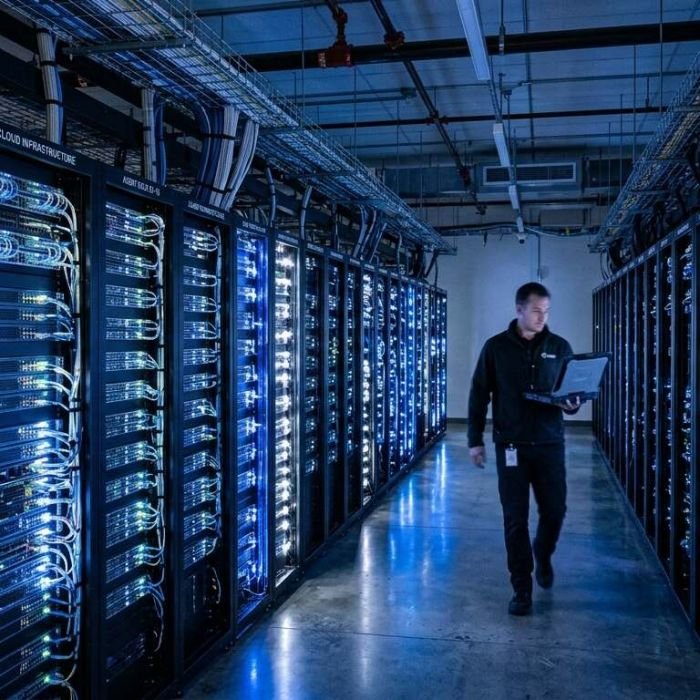
Apollo has indicated that the financing will support the deployment of NVIDIA’s next-generation Vera Rubin chips for SpaceX’s ground-based computing infrastructure.
This structure provides SpaceX with another way to finance its expansion without depending entirely on conventional borrowing. It also allows the company to access expensive computing equipment while spreading payments over the lease period.
AI Becomes a Major Revenue Contributor
The financing agreement arrives as SpaceX increases investment in its artificial intelligence business alongside its established rocket launch and Starlink satellite internet operations.
The company’s AI division delivered a strong performance in the third quarter of 2026. According to reports on its financial results, the segment generated approximately $7.6 billion in revenue out of SpaceX’s total $14.6 billion. Its AI activities include Grok, the Cursor coding tool, and cloud computing services.
This performance demonstrates the growing commercial importance of AI infrastructure within the company’s broader business.
SpaceX’s spending is increasing alongside this revenue growth. Capital expenditures reportedly reached nearly $20 billion, compared with $6.9 billion during the same period a year earlier.
During an October 20 earnings call, CFO Bret Johnsen indicated that the company expected fourth-quarter spending to reach between $35 billion and $40 billion.
These figures illustrate the scale of investment required to build and operate the computing infrastructure needed for advanced AI systems.
Why Leasing Matters in the AI Industry
Developing large-scale AI infrastructure requires substantial upfront investment in GPUs, servers, data centers, networking equipment, and supporting systems.
Leasing offers companies an alternative to purchasing all these assets outright. By spreading equipment costs over several years, businesses can preserve some financial flexibility while expanding their computing capabilities.
For SpaceX, the arrangement also diversifies its funding sources. The company says its AI infrastructure investments are generating payback periods of less than one year, supporting its decision to continue scaling computing capacity.
However, these expectations depend on sustained demand, efficient operations, and the ability to convert computing investments into revenue.
The broader AI infrastructure market faces increasing scrutiny as companies commit billions of dollars to equipment and data center expansion. Investors are becoming more cautious about rising capital requirements and the time needed for infrastructure-focused businesses to achieve sustainable profitability.
Elon Musk Questions the Future of Smaller AI Infrastructure Providers
The financing announcement also highlights differences between companies with diversified revenue streams and businesses focused primarily on renting computing power.
SpaceX benefits from established activities such as Starlink and rocket launches, which provide revenue beyond its AI operations. Elon Musk has argued that companies without comparable sources of income may face greater difficulties securing financing as lenders become more selective.
He has also predicted significant consolidation among smaller AI infrastructure providers, commonly known as neoclouds.
These businesses specialize in offering GPU computing capacity to customers developing and operating AI applications. While demand for their services has expanded, their dependence on expensive hardware and external financing can create financial pressure.
If borrowing becomes more difficult, some providers may struggle to fund expansion or compete with larger companies that have stronger financial resources.
What Comes Next for AI Infrastructure?
SpaceX’s $40 billion financing commitment reflects the growing financial demands of the AI industry. Access to advanced chips and computing capacity is becoming increasingly important for companies competing in AI models, applications, and cloud services.
The leasing arrangement could help SpaceX expand while distributing equipment costs over time. Nevertheless, the scale of its planned spending raises important questions about long-term returns, infrastructure utilization, and the sustainability of the wider AI investment boom.
As demand for AI computing continues to evolve, companies with strong revenue foundations, reliable financing, and effective infrastructure management may have an advantage.
For the broader market, SpaceX’s deal offers a clear indication that the race to build AI infrastructure is becoming as much a financial challenge as a technological one.